









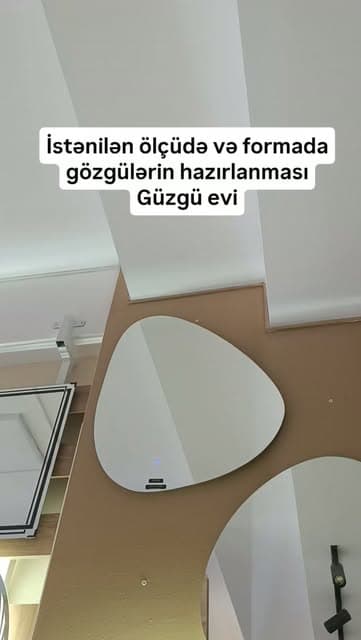
Divar güzgüləri, müxtəlif modellər
WholesaleNegotiable
RetailNegotiable
Min. orderNegotiable
BakuToday, 02:53
WholesaleNegotiable
RetailNegotiable

WholesaleNegotiable
RetailNegotiable

WholesaleNegotiable
RetailNegotiable
WholesaleNegotiable
RetailNegotiable

WholesaleNegotiable
RetailNegotiable
Glass and aluminium wholesale in Azerbaijan serves a fabrication chain rather than end users: glass processors cut, temper and assemble insulated glass units, extruders and importers supply aluminium window systems, and window, door and facade fabricators turn both into finished products. Their customers are developers of residential towers and commercial buildings, shopfitters, partition installers and glazing contractors. Domestic aluminium production and extrusion exist alongside imports of float glass and many profile systems.
Float glass trades per sheet in standard stock sizes or per square metre, by thickness, while aluminium profiles in Azerbaijan are sold per bar of standard length or per kilogram, with alloy, temper, wall thickness and surface finish defined. Sellers may use metr, ədəd or kq as the unit. Price follows the international aluminium price, energy costs for float production and tempering, powder coating or anodising, and freight for fragile loads. Request processor documentation for tempered and laminated safety glass; certificates of conformity for profile systems may be required on facade projects.
Use the city filter to locate a processor near your fabrication shop, since large sheets travel on special racks and long hauls raise breakage risk. Sorting by price works best within one thickness or one profile system. The minimum order, whether in sheets, bars or kilograms, appears on each product page, and you deal with float glass suppliers directly on cutting lists, coating colours and delivery.
Tip: on the Absheron coast, specify a coating class suited to marine environments for aluminium and ask for the edge-seal build-up of insulated units, because salt air and strong winds test seals and finishes faster than inland.
Aluminium sheet is rolled flat metal, normally traded from about 0.5 mm to 6 mm thick in formats such as 1000×2000, 1250×2500 and 1500×3000 mm, and sold by the kilogram or by the sheet. The surface can be smooth, embossed (five-bar or diamond pattern), anodised or colour-coated: embossed sheet goes to stair treads and vehicle floors, smooth sheet to facade cassettes, signs and housings. The alloy grade, temper and thickness tolerance are stated in the mill certificate. Aluminium composite panel is a different product with its own passport.
Aluminium weighs roughly 2.7 kg per square metre for each millimetre of thickness, which is enough to convert a per-kilogram quote into a per-sheet one. Transport sheets flat, with the protective film on and paper between them, because a scratch on an anodised face cannot be repaired.
| Thickness | Weight per sq m (approx.) | Typical use |
|---|---|---|
| 0.5 mm | 1.35 kg | insulation cladding, decor |
| 1.0 mm | 2.7 kg | facade cassettes, signs, housings |
| 1.5 mm | 4.05 kg | ventilation, cassettes, panels |
| 2.0 mm | 5.4 kg | cassettes, door skins, vehicle bodies |
| 3.0 mm | 8.1 kg | embossed floors, structures |
| 4.0 mm | 10.8 kg | load floors, plates, frames |
Last updated:
Float glass is sold by the sheet or by the square metre for a given thickness and size, while aluminium profiles are sold by the bar of standard length or by weight. Processing such as cutting, tempering or powder coating is priced separately, so ask for a cost breakdown when comparing offers.
Profiles in mill finish or common colours can often be bought by the bar or bundle, but a special colour from the coater's chart requires a minimum coating batch, often a set weight per colour. The product page shows the seller's minimum and unit; ask separately about the minimum for special finishes.
Glass sheets travel upright on A-frame or L-frame racks, separated by spacers or interleaving paper and strapped tightly. Unload with suction lifters or a crane, store sheets vertically at a slight angle on padded racks, and keep them dry, since moisture trapped between stacked sheets causes permanent staining.
Tempered glass and laminated glass should carry a permanent marking and come with the processor's test or conformity documents describing the glass type and thickness. For balustrades, facades and shopfronts the designer or client may require certificates of conformity, so agree on them before the order is cut.
The main driver is the international aluminium price, followed by extrusion and coating costs, alloy and wall thickness, and the exchange rate for imported systems. Thermally broken profiles cost more than non-insulated ones because of the insulating strips and extra assembly, and prices move broadly with the metal market.
Window, door and facade fabricators are the core buyers in glass and aluminium wholesale, followed by glazing contractors, developers who buy direct for large projects, shopfitters, furniture makers using glass and aluminium frames, and greenhouse builders. Glass processors also buy float glass in bulk to cut and temper for their own customers.
Extruders can produce custom profiles from a customer's drawing once a die is made, which adds tooling cost and lead time. This makes sense for repeated production of furniture, partitions or signage frames, and the minimum order per profile is usually higher than for standard catalogue sections.
Filter the category by city to see processors and profile stockists near you, sort by price within one specification, and contact sellers directly. If you need regular supply of a particular thickness or system, post a free buy request with monthly volumes so suppliers can propose standing terms.