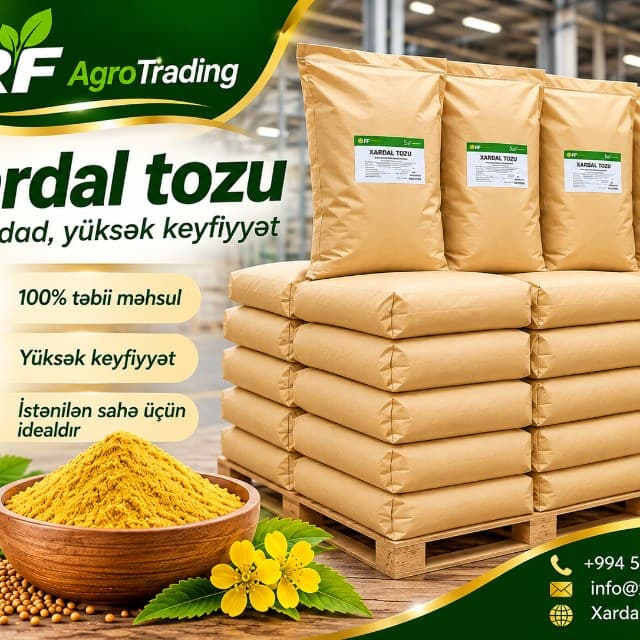












XARDAL TOZU
Wholesale11.50 manat
RetailNo
Min. order20 Kg
BakuYesterday, 14:20
Spice suppliers in Azerbaijan fall into two groups: growers and collectors of local crops such as Absheron saffron, sumac, dried mint, thyme, barberry and wild mountain herbs, and importers of pepper, cumin, cinnamon, turmeric and other tropical spices. Grinders and packers then sell to restaurants, kebab houses, meat processors, bakeries, pickle makers, grocery shops and market traders. Plov and the many grilled meats of Azerbaijani cuisine keep demand for saffron, sumac and dried herbs steady all year.
Most spices trade per kilogram in bags or sacks of 5 to 25 kg, while saffron is sold by the gram in small airtight containers. MOQs are modest compared with other foods, from a few kilograms for a restaurant to several sacks for a packer. Price depends on origin, harvest, colour, aroma, purity and whether goods are whole or ground. Check moisture, colour and foreign matter, and ask for lab results on adulteration, since ground spices and saffron are easy to mix with cheaper material.
Every spice product page states its minimum order and unit, so a per-gram saffron offer and a per-kilogram pepper offer cannot be confused. Filter by city to find growers on Absheron or in the regions, set a price range in AZN, and switch to buy requests if you need a specific spice or blend; then ask the seller directly for samples.
Buy whole spices where you can and grind them close to use: whole seeds and pods keep their aroma much longer, and you can judge their quality by eye, which is nearly impossible with ground powder.
Spices are sold in three forms: whole (seeds, sticks, dried fruit), cracked (flakes or coarse pieces) and ground (powder). For ground spice, fineness is given as a sieve size in mesh, so a sausage maker asks for fine powder while a kebab house takes coarsely cracked pepper. The form is stated together with the packaging: whole spices arrive in multi-layer paper sacks with a polyethylene liner, ground ones in light-proof cartons or foil bags, and dried herbs are shipped pressed in cartons.
Saffron is sold as whole threads in airtight glass or tin containers by the gram, and blends are packed in sacks or bags. The label must show production date, country of origin, net weight and batch number, and any additive in a ground spice, such as salt or starch, has to be declared. A certificate of conformity and hygiene documents may be requested; aroma and colour are judged on a sample, moisture and admixture in a laboratory.
| Spice | Form | Typical wholesale pack |
|---|---|---|
| Black pepper | whole peppercorns, ground | 25 kg sack, polyethylene liner |
| Red pepper (paprika, chilli) | dried whole, flakes, ground | sack, carton |
| Cumin, coriander | seeds, ground | 25 kg sack |
| Cinnamon | sticks (bark), ground | carton, sack |
| Saffron | threads, ground | airtight glass or tin container, by the gram |
| Dried herbs (mint, thyme, basil) | whole leaf, chopped | pressed carton, sack |
Last updated:
Absheron saffron is picked by hand in autumn, dried and sold by the gram or in small multi-gram lots in sealed glass or tin containers. Buyers check the colour of the threads, the aroma, the moisture and whether yellow styles or other material have been mixed in, and for larger lots ask for a lab test of colouring strength.
Whole and ground spices are usually packed in multi-layer paper or polypropylene sacks with an inner liner, or in foil bags for the most aromatic products. Retail packers buy in sacks and repack into small sachets or jars. Keep every opened sack sealed, dry and away from light to protect flavour and colour.
Ask for a recent laboratory report on the batch, compare colour and aroma with a trusted reference sample, and run simple tests such as stirring a pinch into water to spot dyes or fillers. Buying whole spices and grinding them yourself, or through a grinder you trust, is a reliable way to avoid adulterated powder.
Sumac berries are collected in late summer and autumn, mint and thyme are cut from late spring through summer and dried in the shade, and saffron flowers are picked in October and November. New-crop prices are usually lower right after the harvest, while the previous year's stocks are sold off just before it.
Restaurants, kebab and plov houses, meat processors and sausage makers, bakeries, pickle and sauce producers, spice packers and market traders are the usual bulk buyers. Regional restaurants often buy from local herb collectors, while Baku buyers rely more on spice suppliers in Azerbaijan who import and grind a wide range in one warehouse.
Many grinders and packers can mix custom blends for kebab, plov or sausage makers and fill them into sachets or jars under the buyer's label once the order reaches their minimum run. Write down the recipe, grind size, salt content and pack weight, and approve a sample batch before full production.
Exporters commonly provide a phytosanitary certificate, a certificate of origin and laboratory results for moisture, microbiology and contaminants, and some markets may require extra tests or registration. Requirements depend on the destination country, so foreign buyers should confirm them and ask whether the supplier has shipped abroad before.
Store spices in airtight containers or sealed sacks in a cool, dark, dry room, away from strong odours and direct sunlight. Ground spices lose aroma within months, while whole ones last longer, so plan purchases around how fast you use each item rather than buying a year's supply at once.